


Click to chat with TC 24/7
YOUnique Personalized Wellness Programs
created at the meeting point between Health Seekers and Health Providers


The foundation of health — before choosing a diet
Wholesome nutrition is not a diet.

Wholesome Nutrition

It is a way of understanding how food supports the body’s systems — digestion, metabolism, inflammation, hormones, and the nervous system — before committing to any specific nutritional method.
Before choosing what to eat, it’s essential to understand how nutrition works, why needs differ, and when guidance matters.
This page provides the foundational principles that apply across all dietary approaches — and helps you make informed, personalized choices rather than following trends or rigid rules.
Food as a regulator, not a prescription
Why Nutrition Matters
Nutrition influences far more than weight or calories.
It affects energy levels, immune balance, inflammation, gut health, mood, and long-term resilience.
Symptoms often reflect nutritional mismatch, not failure or lack of discipline.
Understanding this shifts nutrition from control to support.





There Is No One-Size-Fits-All Diet
Personal biology comes first
The same diet can help one person and worsen symptoms in another.
Individual needs are shaped by:
-
Genetics
-
Digestive function
-
Stress and nervous system load
-
Hormonal status
-
Medications and medical history
-
Past dieting or restriction
Nutrition works best when it adapts to the person — not the other way around.
How to Choose the Right Nutrition Approach
Personal fit matters more than rules

-
Choosing a nutrition approach is not about finding the “best” diet —
It’s about finding what fits your body, your health status, and your current life context. -
Before committing to any method, it’s important to consider:
-
How your digestion responds to food
-
Your current health concerns or symptoms
-
Past experiences with dieting or restriction
-
Stress levels, sleep quality, and medications
-
Whether your goal is healing, stability, or performance
-
When these factors are ignored, even a “healthy” diet can create an imbalance.
When they’re respected, nutrition becomes supportive rather than controlling.

Tools to address different needs
Diet Methods Are Frameworks, Not Beliefs
Mediterranean, anti-inflammatory, paleo, ketogenic, plant-forward —
Each dietary approach is designed to address specific physiological goals, not to serve as a universal solution.
The key question is not “Which diet is best?”
But “Which framework fits my current body state and goals?”
👉 From here, you can explore the different Diet Types as practical applications of these principles.
Quality, context, and balance
Whole Foods Before Rules
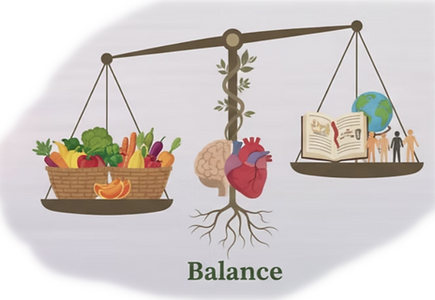
Wholesome nutrition prioritizes:
-
Minimally processed foods
-
Adequate protein for structure and repair
-
Carbohydrates matched to activity and metabolism
-
Healthy fats for hormones and cellular health
-
Variety, flexibility, and sustainability
Calories can be useful — but they are not the whole picture.
Food Quality, Organic Choices, and GMOs
What truly matters - beyond labels and trends
Food quality is shaped by how food is grown, processed, prepared, and combined — not by a single label or claim.
Conversations around organic foods and GMOs are often emotionally charged and overly simplified.
In practice, the impact of food on health depends far more on overall dietary patterns, frequency of exposure, and individual sensitivity than on any one designation.
When organic choices may matter more
Organic foods can be especially relevant when:
-
Reducing pesticide exposure is a priority
-
Large quantities of certain produce are consumed regularly
-
Individuals are more sensitive to environmental or chemical load
-
Supporting soil health and sustainable farming is part of my personal values
In these cases, choosing organic can be a meaningful and supportive decision.


Moving beyond fear-based nutrition
Excessive worry about food purity can become a source of chronic stress, which itself negatively affects digestion, metabolism, and hormonal balance.
Wholesome nutrition favors informed, flexible decisions over rigid rules.
Quality matters — but so does context, accessibility, and long-term sustainability.
Understanding GMOs in context
Genetically modified crops are often discussed as a single category, but their real-world impact varies widely.
The more important questions are:
-
How processed is the food?
-
How often is it consumed?
-
What is the overall quality of the diet?
-
How does the individual body respond to it?
Highly processed foods — regardless of GMO status — tend to place a greater burden on metabolic and inflammatory systems than minimally processed whole foods.
The goal is not perfection, but choices that support health without creating unnecessary tension around food.
Calories: A Tool, Not a Goal
Understanding when counting helps and when it doesn’t
Calories measure energy, but they do not measure food quality, nutrient density, metabolic health, or how the body actually responds to what we eat.
For some people, temporary calorie awareness can be helpful —for example, to understand portion sizes, create structure during weight changes, or support athletic performance.
However, for many individuals, calorie counting quickly becomes:
Distracting rather than informativeStressful rather than supportive.
Disconnected from hunger, fullness, and body signalsWhen digestion, hormones, inflammation, stress, or nervous system balance are involved, focusing only on numbers often misses the real issue.
Wholesome nutrition prioritizes context, balance, and nourishment first.
Calories can be a tool — but they should never become the goal.

Using a Calorie Calculator Wisely
A reference point, not a prescription
Calorie calculators provide general estimates, based on population averages and simplified assumptions.
They are not personalized nutrition plans, nor are they diagnostic tools.
Used appropriately, a calculator can help:
-
Understand rough energy ranges
-
Identify extreme under- or over-eating
-
Learn how macronutrients are distributed
Misused, calculators can:
-
Create rigid targets
-
Override body cues
-
Lead to frustration when results don’t match expectations
If symptoms persist, energy remains low, or progress stalls, the issue is rarely “wrong math.”
In most cases, personalization, food quality, digestion, and regulation matter more than calculation.

When Nutrition Becomes Over-Controlled

Nutrition is meant to support health — not create fear, guilt, or constant self-monitoring.
Signs that structure may have become excessive include:
-
Obsessive tracking or anxiety around food choices
-
Ignoring hunger or fullness cues
-
Fatigue despite “doing everything right.”
-
Digestive symptoms that worsen over time
-
Feeling restricted, tense, or disconnected from eating
In these situations, adding more rules rarely brings relief.
Improvement often begins when control gives way to understanding, flexibility, and support.
Wholesome nutrition respects structure — but never at the expense of well-being.
Signs it may be time to step back and reassess
Myths, Trends, and Nutritional Noise
When information creates confusion
Modern nutrition is crowded with:
-
Contradictory headlines
-
Fear-based messaging
-
Trend-driven food rules
-
Overgeneralized “superfoods”
-
Oversimplified supplement advice
Clear knowledge reduces fear.
Good nutrition education empowers choice — not anxiety.

When Nutrition Shouldn’t Be Chosen Alone
Signs that guidance matters
Self-directed dietary changes may not be appropriate when there are:
-
Ongoing digestive symptoms (IBS, sensitivities, bloating)
-
Autoimmune or inflammatory conditions
-
Chronic fatigue or under-eating
-
A history of disordered eating
-
Repeated failure of “healthy” diets to improve symptoms
In these cases, nutrition is part of a process, not an experiment.


-
Start with foundational understanding (this page)
-
Explore diet frameworks that may be relevant
-
Notice adaptations and cautions
-
Use questionnaires or TC guidance for personalization
-
Focus on fit, not perfection
👉 If you’re unsure where to begin, guided support can help clarify your next step.
A guided, non-dogmatic approach
How to Use This Platform

Wholesome nutrition is not about doing more —
it’s about choosing wisely, with understanding.
Foundations of Healthy Eating
Build a strong base: balance, whole foods, and habits that last. Personalize as you go.
Nutrition Debates & Choices
There’s no one-size-fits-all diet. Compare approaches and pick what serves your goals.
Food Quality Matters
It’s not only what you eat — it’s how it’s grown, processed, and handled.
Nutrients & Supplements
Fill the gaps: good fats, key micronutrients, and smart supplement use when needed.
Explore diet types

Mediterranean
Heart-forward balance, whole foods

Intermittent Fasting
Eating windows that fit you

Low-FODMAP
Gut-friendly for sensitive digestion

Low-Histamine
Fresh, simple, low-histamine meals

Paleo
Whole foods; quality proteins

Plant-Based
Plants first; minimal ultra-processing

Gluten-Free
Nutrient-dense swaps, zero gluten

Elimination Diet
Short, guided trigger discovery

Keto
Very low-carb, higher fat

Anti-Inflammatory
Colorful plants, omega-3s, spices

Dairy-Free
Clearer skin; smart calcium sources

DASH
BP-friendly; potassium-rich pattern
